Showing posts with label environmental issues. Show all posts
Showing posts with label environmental issues. Show all posts
Monday, November 26, 2012
Less Stuff = More Happiness
Something to be mindful of...maybe especially during this big consumer season?
I like especially the idea of - Small and Sexy.
"Consider the benefits of an edited life."

Sunday, April 8, 2012
A new organic sleep system!
Alrighty then...the orders have been made, the financing has been completed...and I'm ALMOST done hyperventilating over the cost. Here's what it finally came down to, after hours upon hours of research.
Mattress -
Choice #3 - Pure Latex Bliss (model: Pamper) - found for $2500 in Silverdale - $1400 online at The Healthy Back Store - very good reviews on this one
Choice #2 - Sealy Embody (model: Insightful) - found locally for $1450 on sale
Choice #1 - Emerald (model: Tierra/Earth) - found locally for $1599
Why did I choose #1? It came down to this - the Emerald mattress, though lesser known and much harder (if not impossible) to find information on, is from a local manufacturer (Tacoma). This company has been in the mattress making business for around 40 years. I liked that the salesman explained his reasoning for stocking only Emerald and one other brand was that they both came from WA and the factories were close enough he could drive over and walk through them to see exactly what was going into the mattresses. Of course, I'm not naive...I realize salesmen have their sales pitch. I also liked that this mattress had all the specs I was looking for (100% natural latex, organic wool top layer, soy-based foam beneath, organic bamboo cover) and it wasn't $4000 like most other mattresses with these qualifications. I like the organic part of the whole thing, and the wool topper - for it's natural anti-microbial properties and it's ability to breathe and, ironically, stay cool. I also appreciate the absence of polyester or polyurethane foam. This was pretty much the least toxic, most natural mattress I could afford. The store didn't have the mattress on hand, so they are ordering - with the written promise that if I don't like the product, I will be given a full refund. At that point, I'll move on to Choice #2. But, if I keep it, I'll be writing a full review...as I can't find one anywhere on the web.
Pillows - $66 for two king
I looked at wool, Kapok, organic cotton, latex, and silk. Organic cotton was the first to be ruled out, because so many people complain about them flattening out too quickly or losing their shape. Kapok is similar, but garners better reviews. Those are the cheapest options. I was initially then deciding on latex (shredded for pliability and flexibility), but the reviews were all over the place. So then it was on to wool, but my wallet started to quiver in fear. I got lucky and found a great deal on a set of Smartsilk pillows on Amazon. The Smartsilk brand gets great reviews. I hadn't really though of silk, but like like wool, this particular material is naturally anti-microbial and recommended for people with allergies and asthma. I do think these are made in China but Smartsilk is a Montreal-based company.
Mattress and Pillow protection - $169
To protect our investment, I've ordered waterproof mattress and pillow protectors. I didn't want anything vinyl or plastic or anything that remotely looked like a crib protector. This is more to protect the mattress from sweat and skin and to keep dust mites from setting up shop (the wool in the mattress will help that, too). I looked at four particular brands that received great reviews and that fit my budget. Luna, Dusk 2 Dawn, Gotcha Covered Organic, and Magnolia Organic (listed from least to most expensive). While the Luna earns shining reviews and is U.S. made, it is not organic. Dusk 2 Dawn is about 20-30$ more expensive and is made of organic cotton and a "breathable membrane" of some fancy concoction that isn't really explained on the website. Magnolia Organic has a mattress barrier cover in thick organic cotton ($139 on Amazon, but only $89 on their website), but the matching pillow protectors were unavailable in king (if you don't need king size, I'd go with this one because it's 100% cotton but thick enough to fend off icky critters and protect your mattress from normal use). It was my first choice, but I ended up going with the Gotcha Covered Organic and matching pillow protectors because they are made in the U.S. and contain recycled, non-toxic poly material on one side as a barrier and 100% organic cotton on the other. I got an acceptable deal online at Living in Comfort.
Bedding - $125
I went with Magnolia Organics for the sheets and blanket (very good prices on Amazon - comparable to much lesser quality goods). Not made in U.S., as far as I can tell...but impressive fair trade agreement and apparently good company ethics. Also, they receive consistent 4 and 5 star ratings across the web. Luckily, my homemade quilt will still fit and I already have matching shams for that...so I didn't have to incur the added expense of a bedspread or comforter - and my curtains already match that, so I'm set there, too.
So....mattress and bedding for under $2000 and every last bit of it is ecologically responsible. In all reality...all that research saved me hundreds...if not thousands. Though, if I'm honest, there's no way I would have spent an outrageous 3 or 4 thousand on a mattress, no matter how wonderful it was. I just don't have that kind of cash to spread around. So, this was the absolute best I could do at getting exactly what I wanted on a budget. Could this have been done cheaper? Possibly, but quality would have suffered and I would not have been as happy with my choice.
I must say I am damn glad to be done with it. After having stopped the sale of my first mattress purchase (took me roughly an hour to change my mind and go back to the store and say no) and taking back pillows and bedding to Kohl's (all Pakistan- and India-made and not much cheaper than what I ended up getting), I'm exhausted, mentally and physically.
I hope you can benefit from all the time and energy I put into making these decisions. There are a lot of eco-conscious and health-conscious choices available out there. For example, I loved the wool bedding (Natura and Shepherd's Dream have a lot of great stuff), but it's very, very expensive. And I saw dozens of mattresses in the $2500-4000 range. The Smartsilk company also sells bedding packages, but they were all in the $400-$800 range.So, as you can see, my choices were made with more than just environment and health in mind. Compromises had to be made, but as with all of my major consumer purchases, I weigh the factors. I make a list of dream qualities for a given product and then I try to meet as many of them as possible. That's what I hope I've done here.
Now, it's time to sleep on my crummy old mattress. I'm up way too late, and tomorrow is my last day of Spring Break. Time to relax. Finally.
Mattress -
Choice #3 - Pure Latex Bliss (model: Pamper) - found for $2500 in Silverdale - $1400 online at The Healthy Back Store - very good reviews on this one
Choice #2 - Sealy Embody (model: Insightful) - found locally for $1450 on sale
Choice #1 - Emerald (model: Tierra/Earth) - found locally for $1599
Why did I choose #1? It came down to this - the Emerald mattress, though lesser known and much harder (if not impossible) to find information on, is from a local manufacturer (Tacoma). This company has been in the mattress making business for around 40 years. I liked that the salesman explained his reasoning for stocking only Emerald and one other brand was that they both came from WA and the factories were close enough he could drive over and walk through them to see exactly what was going into the mattresses. Of course, I'm not naive...I realize salesmen have their sales pitch. I also liked that this mattress had all the specs I was looking for (100% natural latex, organic wool top layer, soy-based foam beneath, organic bamboo cover) and it wasn't $4000 like most other mattresses with these qualifications. I like the organic part of the whole thing, and the wool topper - for it's natural anti-microbial properties and it's ability to breathe and, ironically, stay cool. I also appreciate the absence of polyester or polyurethane foam. This was pretty much the least toxic, most natural mattress I could afford. The store didn't have the mattress on hand, so they are ordering - with the written promise that if I don't like the product, I will be given a full refund. At that point, I'll move on to Choice #2. But, if I keep it, I'll be writing a full review...as I can't find one anywhere on the web.
Pillows - $66 for two king
I looked at wool, Kapok, organic cotton, latex, and silk. Organic cotton was the first to be ruled out, because so many people complain about them flattening out too quickly or losing their shape. Kapok is similar, but garners better reviews. Those are the cheapest options. I was initially then deciding on latex (shredded for pliability and flexibility), but the reviews were all over the place. So then it was on to wool, but my wallet started to quiver in fear. I got lucky and found a great deal on a set of Smartsilk pillows on Amazon. The Smartsilk brand gets great reviews. I hadn't really though of silk, but like like wool, this particular material is naturally anti-microbial and recommended for people with allergies and asthma. I do think these are made in China but Smartsilk is a Montreal-based company.
Mattress and Pillow protection - $169
To protect our investment, I've ordered waterproof mattress and pillow protectors. I didn't want anything vinyl or plastic or anything that remotely looked like a crib protector. This is more to protect the mattress from sweat and skin and to keep dust mites from setting up shop (the wool in the mattress will help that, too). I looked at four particular brands that received great reviews and that fit my budget. Luna, Dusk 2 Dawn, Gotcha Covered Organic, and Magnolia Organic (listed from least to most expensive). While the Luna earns shining reviews and is U.S. made, it is not organic. Dusk 2 Dawn is about 20-30$ more expensive and is made of organic cotton and a "breathable membrane" of some fancy concoction that isn't really explained on the website. Magnolia Organic has a mattress barrier cover in thick organic cotton ($139 on Amazon, but only $89 on their website), but the matching pillow protectors were unavailable in king (if you don't need king size, I'd go with this one because it's 100% cotton but thick enough to fend off icky critters and protect your mattress from normal use). It was my first choice, but I ended up going with the Gotcha Covered Organic and matching pillow protectors because they are made in the U.S. and contain recycled, non-toxic poly material on one side as a barrier and 100% organic cotton on the other. I got an acceptable deal online at Living in Comfort.
Bedding - $125
I went with Magnolia Organics for the sheets and blanket (very good prices on Amazon - comparable to much lesser quality goods). Not made in U.S., as far as I can tell...but impressive fair trade agreement and apparently good company ethics. Also, they receive consistent 4 and 5 star ratings across the web. Luckily, my homemade quilt will still fit and I already have matching shams for that...so I didn't have to incur the added expense of a bedspread or comforter - and my curtains already match that, so I'm set there, too.
So....mattress and bedding for under $2000 and every last bit of it is ecologically responsible. In all reality...all that research saved me hundreds...if not thousands. Though, if I'm honest, there's no way I would have spent an outrageous 3 or 4 thousand on a mattress, no matter how wonderful it was. I just don't have that kind of cash to spread around. So, this was the absolute best I could do at getting exactly what I wanted on a budget. Could this have been done cheaper? Possibly, but quality would have suffered and I would not have been as happy with my choice.
I must say I am damn glad to be done with it. After having stopped the sale of my first mattress purchase (took me roughly an hour to change my mind and go back to the store and say no) and taking back pillows and bedding to Kohl's (all Pakistan- and India-made and not much cheaper than what I ended up getting), I'm exhausted, mentally and physically.
I hope you can benefit from all the time and energy I put into making these decisions. There are a lot of eco-conscious and health-conscious choices available out there. For example, I loved the wool bedding (Natura and Shepherd's Dream have a lot of great stuff), but it's very, very expensive. And I saw dozens of mattresses in the $2500-4000 range. The Smartsilk company also sells bedding packages, but they were all in the $400-$800 range.So, as you can see, my choices were made with more than just environment and health in mind. Compromises had to be made, but as with all of my major consumer purchases, I weigh the factors. I make a list of dream qualities for a given product and then I try to meet as many of them as possible. That's what I hope I've done here.
Now, it's time to sleep on my crummy old mattress. I'm up way too late, and tomorrow is my last day of Spring Break. Time to relax. Finally.
Monday, April 2, 2012
Eco-friendly mattresses (locally procured)

Well, it's that time...the old mattress is now 12 yrs. old and causing bodily harm - time to kick it to the curb. But, my oh my, does it lead to some intense research.
So, here's what I've set out looking for (keep in mind, when I begin my research on anything, I shoot for the moon - what would my dream _____ look like? and then I end up moving further and further down my list of exceptions and desires until I can afford a compromise item):
- comfort (which is hard to agree on when two bodies are deciding)
- price (ummm....I really don't want to spend more than 6-800$ - but I'm aware these things cost an arm and a leg)
- eco-friendly construction
- made in the USA
(Here's a great blog post on choosing a natural/organic mattress.)
Alright - let the research begin. Apparently, what I'm looking for in an eco-friendly mattress is:
- a wood frame that is Forest Stewardship Council certified
- natural latex (I have a latex sensitivity...so I will have to look that one up - here's a forum on the topic from Green Living) or soybean foam core
- no synthetic foam core, like polyurethane (it contains PBDEs - linked to breast cancer - and even though companies claim it is a recyclable product, it contains chemicals that can cause asthma and, overtime, can let off chemicals into the air) - instead choose naturally fire-retardant wool
- organic cotton or hemp cover (hemp provides mildew/mold resistance, as does wool)
- bamboo is naturally anti-microbial (but usually only found in mattress pads and other bedding, though some companies use it in mattress construction)
- avoid coil mattresses because they harbor dust mites more readily (which is the source of most allergies)
Now, how much is all this going to cost? And can I get it where I live?
Well...we live in a small town - or in the middle of a succession of small towns - so our options are limited (which also raises the price). We have a few furniture stores (one is going out of business, so I'll give that a shot), Bargain Warehouse (which I'm not feeling confident will have eco-friendly options), and Sleep Country. I did a bit of preliminary research on Sleep Country and found this company statement about their new line (3 years old now...so maybe there are a few other options by now) of Nature's Rest organic mattresses (bonus: Made in the USA). I'll see if our local store has such a thing. From the little I've found on the web...these seem to be quite spendy (in the thousands). A few other brands I have found are: Essentia (natural memory foam), Keetsa, Dormia, and Cozypure. Simmons also has a line called Natural Care (though I am always aware of greenwashing and really wonder what the ingredients truly are). Some people recommend a traditional Japanese futon (placed on a slatted platform bed). I'm all about the platform bed and only having one mattress (to avoid the box spring and the squeaking that eventually begins over time as the joints and coils break down).
There is also always IKEA. Quite a drive for us, but possibly worth it if I can't find anything more local. I will admit that I'm pretty sure IKEA's prices can't be beat for the product. Plus I love their 90 money-back guarantee for mattresses.
I also found an all wool mattress for about a grand at The Organic Mattress Store - they take special care, though, so it takes some thought before purchase.
In my internet travels, here a few complaints I dug up on natural and organic mattresses:
- the strong odor of latex and soybean (especially) foam mattresses (which I can attest to, as I have a natural latex yoga mat - even though I have a latex sensitivity)
- wool, since it is an animal product, must be cleaned at least once a year
- the latex foam mattresses seem to have some issues with sagging and denting
- cost!! (As we all know, if it says natural, organic, or eco-friendly, it's going to cost a lot more - which is really quite absurd.)
For some organic mattress reviews, check out this site.
Anyone have any suggestions? I would rather purchase locally so the tax dollars stay nearby. Plus, I don't want to pay a whole wad of extra cash on shipping.
Saturday, March 31, 2012
Earth-friendly...as long as it's hip and easy...

The bandwagon is large and there are a lot of people riding on it. Sustainable goods, eco-idea magazines/books/websites, greener alternatives, recycled goods, natural ingredients, hybrid cars, bicycling to work...you name it, many of us are going there.
It makes us feel good and socially responsible. I know that's why I do a lot of the "green" things I do. But, like most people, I do what's easy. I take short showers, I try to remember my re-usable shopping bags, I buy locally when possible. But, there's a lot more I could be doing. For most of us, the popularity of being "earth-friendly" has provided us the means to easily and happily transition with little discomfort to a life that "feels" environmentally sound.
If I took a good hard look at the things I do and things I could be doing, I'm sure the former would be a much shorter list than the latter. Maybe that's a good activity for us all to do today: Make a list of all the earth-friendly practices you have incorporated into your life (really, it will probably make you feel good to see that in writing, anyway)...and then make a list of things you could be doing - with relative ease...and another list of things that might actually push you to a bit of discomfort.
What I notice is that it is usually money that holds me back. But, in the beginning, I proved to myself that it was actually cheaper in some regards to choose the local, more environmentally-friendly products. The rest of the stuff seems so huge. I cannot afford a new car (and even if I could, I'm not willing to give up my AWD for a tiny little aluminum can I can plug in or wind up). I cannot afford to have solar panels put on my roof (and let's face it, I live in the Pacific NW - we see the sun all of about 2 seconds one day in August - so it'd be a wast of money). I will not live in 250 square feet of space (I'm a little claustrophobic and I think I'd go insane if I had to be that close to my son all day).
In the end...it is all about compromise. But, it's not a bad idea to at least be aware of the changes you have made, the changes you can still make, and the changes you are unwilling to make. At least that way, you aren't claiming ignorance, you're making informed decisions about your limits and your choices.
What have been the hardest changes you have made? What changes do you still plan to make?
Oh---and a little reminder - tonight is EARTH HOUR. The concept is that everyone turns of their lights for one hour all at the same time. One hour of darkness - as an act of dedication to the planet and the cause.
And for fun...
There is a current conversation occurring on TED exploring why "sustainable consumption" has not permeated electricity consumption.
Wednesday, February 29, 2012
Whiteboard Calendars
It might seem like a no-brainer...but just in case it isn't...
Having a new calendar every year could be viewed as wasteful. Sure, you might re-use the pictures - frame them, use them in an art project, cover a wall. And if you plan to do that, then go ahead and buy the calendar.
But, if you're just going to throw the calendar away at the end of the year, trade it in for a whiteboard calendar. You can change the dates, easily make amendments, and you won't have to waste money or throw away another calendar.
Just a thought.
I bought one, and have assigned a color to each member of the family. That way, we can easily see the events that affect particular people.
My husband has a constantly shifting schedule, so it makes it easy for us to change dates and times without have to cross things out.
 Anyone have other ideas or ways that you keep family schedules straight while still being mindful of the planet? Please share!
Having a new calendar every year could be viewed as wasteful. Sure, you might re-use the pictures - frame them, use them in an art project, cover a wall. And if you plan to do that, then go ahead and buy the calendar.
But, if you're just going to throw the calendar away at the end of the year, trade it in for a whiteboard calendar. You can change the dates, easily make amendments, and you won't have to waste money or throw away another calendar.
Just a thought.
I bought one, and have assigned a color to each member of the family. That way, we can easily see the events that affect particular people.
My husband has a constantly shifting schedule, so it makes it easy for us to change dates and times without have to cross things out.

Saturday, February 25, 2012
Books for Green Parents and Kids


I'm always looking for new resources. These are just a few I found. Anyone have any others to add?
I especially found it hard to find books about green families. So, any suggestions would be appreciated.
I especially found it hard to find books about green families. So, any suggestions would be appreciated.
Saturday, February 4, 2012
Mama K's Aromatic Play Clay
Ohhhhh....this sounds tooo fun.
I know making your own clay isn't that hard...or this expensive. But what a cute gift!

Bergamot
Cardamom
Chamomile
Geranium
Lavender
Lemongrass
Sweet Orange
Available at Country Aire Natural Foods.
I know making your own clay isn't that hard...or this expensive. But what a cute gift!

Bergamot
Cardamom
Chamomile
Geranium
Lavender
Lemongrass
Sweet Orange
Available at Country Aire Natural Foods.
Friday, January 27, 2012
Wine Corks as Soil?

Place your leftover wine corks in your houseplant pots, all along the surface (you can just throw them in, or you can arrange them in a pattern, if you are so inclined).
Frank Hyman (a gardener/Urban Farm columnist) claims that it cut down on his housplant watering by half.
"Cork is hydrophobic, meaning it doesn't absorb water and decomposes slowly."
Of course, you have to pack them in tightly so they won't float when you water (if you care at all about the design).
The cork acts as a long-lasting mulch for the houseplant.
What a cool use for a cork! (Beats a trivet any day.)
Head over to Frank Hyman's website or his blog (which I think is more interesting) for more cool, green gardening tips.
Tuesday, January 24, 2012
Review: Acure Organics
Well, I took the plunge and ordered the products, even though they
offered no samples. And I must say, I am impressed. I like the subtle,
herbal smell of each of the items...and I like the way they work. The
tiny little 4 oz. bottle for $15 sort of freaked me out, but, now that
I've used it, I realize that you really need just a pea-sized amount.
Same with the lotions (one squirt is all you need).
 I
ordered the oily/combo skin package. I have truly combination skin
(oily t-zone that still produces dry skin...weird). These products do
not dry me out. If I don't use the lotion, though, it sort of does a
bit. So, I would not suggest these products for anyone with dry skin
issues. Oily skin? Absolutely. Combo skin? Most likely. I think you
could even do without the toner, if you really wanted. I personally
like to use toners...but I think that comes from using cleansers that
don't really "cleanse". For me, the toner has always been a 2nd step in
the cleaning process. With this facial cleanser, I notice absolutely
no residue on my cotton ball after using the toner, which means the
cleanser is actually doing it's job (go figure!).
I
ordered the oily/combo skin package. I have truly combination skin
(oily t-zone that still produces dry skin...weird). These products do
not dry me out. If I don't use the lotion, though, it sort of does a
bit. So, I would not suggest these products for anyone with dry skin
issues. Oily skin? Absolutely. Combo skin? Most likely. I think you
could even do without the toner, if you really wanted. I personally
like to use toners...but I think that comes from using cleansers that
don't really "cleanse". For me, the toner has always been a 2nd step in
the cleaning process. With this facial cleanser, I notice absolutely
no residue on my cotton ball after using the toner, which means the
cleanser is actually doing it's job (go figure!).
Ultimately, I give these products a 9 out of 10. They work well. The company has a great philosophy (see my original post)...fair trade, cruelty-free, supports a cause...etc., etc., etc. Below, I have listed the ingredients of each of the products I tried, highlighting in bold the ingredients that some may find questionable and in need of further research.


Organic Curoxidant Blend (Organic Acai Berry,
Organic Blackberry, Organic Rosehips, Organic Elderberry, Organic Nettle
Leaf, Organic Cranberry, Organic Goji Berry, Organic Raspberry, Organic
Pomegranate, Organic Blueberry), Organic Calendula Officinalis, Organic
Chamomile, Fair Trade Certified™ Organic Yerba Mate, Organic Aloe Vera
Leaf Juice, Emulsifying Wax Nf (Vegetable), Fair Trade Certified™
Organic Cocoa Seed Butter, Organic Safflower Seed Oil, Organic Coconut
Oil, Glyceryl Stearate Se (Vegetable Derived), (Vegetable) Glycerin,
Organic Sunflower Oil, Infusion Of Organic Calendula Officinalis Flower
In Fair Trade Certified™ Organic Olive Oil, Glucono Delta Lactone
(Fermented Sugar), D-Alpha Tocoperyl Acetate (Vitamin E), Coq10, Organic
Chlorella Growth Factor, Organic Evening Primrose Oil, Potassium
Sorbate, Essential Oils Of Sage, Lavandin, Lemongrass, Spearmint.


Ultimately, I give these products a 9 out of 10. They work well. The company has a great philosophy (see my original post)...fair trade, cruelty-free, supports a cause...etc., etc., etc. Below, I have listed the ingredients of each of the products I tried, highlighting in bold the ingredients that some may find questionable and in need of further research.

SuperFruit Facial Cleansing Gel:
Organic Curoxidant Blend (Organic Acai Berry,
Organic Blackberry, Organic Rosehips, Organic Elderberry, Organic Nettle
Leaf, Organic Cranberry, Organic Goji Berry, Organic Raspberry, Organic
Pomegranate, Organic Blueberry, Organic Calendula Officinalis, Organic
Chamomile, Fair Trade Certified™ Organic Yerba Mate, Lauryl Glucoside
(Vegetable Derived), Decyl Glucoside (Sugar Soap), Fair Trade Certified™
Organic Olive Oil, Organic Chlorella Pyrenoidosa (Chlorella Growth
Factor), Glucono Delta Lactone (Fermented Sugar), Potassium Sorbate
(Food Grade Preservative), Lemon Essential Oil, Citric Acid

Oil Control Day Cream:

Rose + Red Tea Facial Toner:
Fair Trade Certified™ Organic Rooibos, Organic
Yerba Mate, Organic Acai, Organic Blackberry Leaf, Organic Rosehips,
Organic Nettle Leaf, Organic Calendula, Organic Chamomile, Organic
Witch Hazel, Organic Bulgarian Rose Water (Hydrasol), (Nop Cert.
Organic) Glycerin*, Organic Chamomille And Calendula Flower Extracts

Chlorella Growth Factor + Pomegranate Night Cream:
Organic Curoxidant Blend (Organic Acai Berry,
Organic Blackberry, Organic Rosehips, Organic Elderberry, Organic Nettle
Leaf, Organic Cranberry, Organic Goji Berry, Organic Raspberry, Organic
Pomegranate, Organic Blueberry), Organic Calendula Officinalis Organic
Chamomile, Fair Trade Certified™ Organic Yerba Mate, Apricot Kernel Oil,
Avocado Oil, Vegetable Glycerine, Sweet Almond Oil, Glyceryl Stearate
(Vegetable Derived), Cetyl Alcohol, Jojoba Oil, Glucose (Sugar), Glucose
Oxidase & Lactoperoxidase (Milk & Sugar Enzymes), Organic
Chlorella Pyrenoidosa (Chlorella Growth Factor), Organic Evening
Primrose Oil, St Johnswort Oil, Lavender (Essential) Oil, Lemon Oil,
Xanthan Gum
Wednesday, January 18, 2012
Waste: Analyze and Reduce
We all know we should reduce, reuse, and recycle. Some of us take it more seriously than others. I, personally, am aware I could do more, but hey, it's a process.
Several years ago, I went to a conference on gifted education. A handful of the break out sessions were centered on ecology and the environment. At the time, it was a huge new focus for me, and I was incorporating concepts into my classroom on a regular basis, with a whole unit on consumerism, waste, geography, and environmental impact. We'd watch films (Wall-e, Ferngully, CNN's Planet in Peril, The Story of Stuff, PBS's Affluenza/Return to Affluenza, Planet Earth), and read books (The Curious Garden, The Wump World, The Lorax, A Material World, What the World Eats, Hungry Planet), and do dozens of activities to explore human impact on the earth (A Drop in the Bucket, The World as an Apple, and Fred the Fish are a few of my favorites).
But one truly impacted how I did things. I'm not sure what you'd call it, maybe just "Effective" (I'll explain shortly).
At the time, we were without garbage service (to save $)...and the more we could recycle the less we had to spend once the truck was weighed as we entered the dump. Now, we have garbage service, but we have the smallest can and have pick-up only every other week (which works for us 90% of the time) along with recycling (which we tend to have a lot of - glass/paper/cardboard/plastic/aluminum).

So, here's how the experiment works. Get a garbage bag (if you have several people in your household, give everyone his or her own - it could be quiet an eye-opener). Pack this bag around with you all day (all week if you can handle it). Now, everything you throw away goes in this bag. If you can figure out how to recycle it or reuse it, do so. At the end of the day (or each day, if you plan to go a week), take a look at what's in there. Keep a list/diary of the items you tend to throw out; is there a way you can avoid it tomorrow? I noticed right away (since I was living in dorm, away from home) that my consumption of paper cups/napkins was more prevalent...even paper towels in the restroom. Well, those were easy fixes. I dug my reusable mug out of my car, went to store and bought a few cloth napkins, and used the hand-drier on the wall of the bathroom. Carrying the garbage bag around didn't teach me that waste was wrong. I already knew that. But, it did attach a neon light to my careless choices. Since we all had to bring our bag to class on a daily basis, it sort of became a competition. No-one wanted to be the one with the fullest bag.
I've done this experiment with my students. Of course, we have some rules about food and hygiene products. I usually have them dispose of these elsewhere, but still record them on paper. It's amazing what they learn about themselves and their families.

Considering what most people throw away, it's amazing that more isn't done to encourage people to recycle. The majority of what we dispose of is either recyclable, re-usable, compostable, or is something we didn't need in the first place. For some of us...it's simply a matter of living in a place that does not recycle certain items (often types of plastics). I really wish companies would use as little packaging as possible.
I started out this blog, a few years ago, by measuring my global footprint. So, let's see how things have changed.
According to the same footprint calculator I used then:
My results (4.07 earths)
Tips for reducing my footprint
Two years ago...my result was 5.16 earths. So, I've managed to reduce it by a little more than one planet. Not bad. Not great, I'll admit...but certainly an improvement. And if I can do it...absolutely anyone can.
There's a much more fun version of the calculator that I use with kids (go to footprintnetwork.org).
According to this site, the areas of my biggest footprint are energy and services. And my "number of planets it would take to sustain the world if everyone lived the way I do" result is pretty much the same: 4.19 planets.
Where do I still fall short? Transportation, electrical usage, non-local food items (outside of 200 miles).
Hmmm...so now...two more years - can I reduce my impact by another planet? I'm pretty sure. It's gradual, but, it's sustainable change.
So what are some easy ways to keep your garbage bag as empty as possible? Here are 20 to start with:
Several years ago, I went to a conference on gifted education. A handful of the break out sessions were centered on ecology and the environment. At the time, it was a huge new focus for me, and I was incorporating concepts into my classroom on a regular basis, with a whole unit on consumerism, waste, geography, and environmental impact. We'd watch films (Wall-e, Ferngully, CNN's Planet in Peril, The Story of Stuff, PBS's Affluenza/Return to Affluenza, Planet Earth), and read books (The Curious Garden, The Wump World, The Lorax, A Material World, What the World Eats, Hungry Planet), and do dozens of activities to explore human impact on the earth (A Drop in the Bucket, The World as an Apple, and Fred the Fish are a few of my favorites).
But one truly impacted how I did things. I'm not sure what you'd call it, maybe just "Effective" (I'll explain shortly).
At the time, we were without garbage service (to save $)...and the more we could recycle the less we had to spend once the truck was weighed as we entered the dump. Now, we have garbage service, but we have the smallest can and have pick-up only every other week (which works for us 90% of the time) along with recycling (which we tend to have a lot of - glass/paper/cardboard/plastic/aluminum).

So, here's how the experiment works. Get a garbage bag (if you have several people in your household, give everyone his or her own - it could be quiet an eye-opener). Pack this bag around with you all day (all week if you can handle it). Now, everything you throw away goes in this bag. If you can figure out how to recycle it or reuse it, do so. At the end of the day (or each day, if you plan to go a week), take a look at what's in there. Keep a list/diary of the items you tend to throw out; is there a way you can avoid it tomorrow? I noticed right away (since I was living in dorm, away from home) that my consumption of paper cups/napkins was more prevalent...even paper towels in the restroom. Well, those were easy fixes. I dug my reusable mug out of my car, went to store and bought a few cloth napkins, and used the hand-drier on the wall of the bathroom. Carrying the garbage bag around didn't teach me that waste was wrong. I already knew that. But, it did attach a neon light to my careless choices. Since we all had to bring our bag to class on a daily basis, it sort of became a competition. No-one wanted to be the one with the fullest bag.
I've done this experiment with my students. Of course, we have some rules about food and hygiene products. I usually have them dispose of these elsewhere, but still record them on paper. It's amazing what they learn about themselves and their families.

Considering what most people throw away, it's amazing that more isn't done to encourage people to recycle. The majority of what we dispose of is either recyclable, re-usable, compostable, or is something we didn't need in the first place. For some of us...it's simply a matter of living in a place that does not recycle certain items (often types of plastics). I really wish companies would use as little packaging as possible.
I started out this blog, a few years ago, by measuring my global footprint. So, let's see how things have changed.
According to the same footprint calculator I used then:
My results (4.07 earths)
Tips for reducing my footprint
Two years ago...my result was 5.16 earths. So, I've managed to reduce it by a little more than one planet. Not bad. Not great, I'll admit...but certainly an improvement. And if I can do it...absolutely anyone can.
There's a much more fun version of the calculator that I use with kids (go to footprintnetwork.org).
According to this site, the areas of my biggest footprint are energy and services. And my "number of planets it would take to sustain the world if everyone lived the way I do" result is pretty much the same: 4.19 planets.
Where do I still fall short? Transportation, electrical usage, non-local food items (outside of 200 miles).
Hmmm...so now...two more years - can I reduce my impact by another planet? I'm pretty sure. It's gradual, but, it's sustainable change.
So what are some easy ways to keep your garbage bag as empty as possible? Here are 20 to start with:
- compost
- carry a re-usable mug/cup/set of silverware with you at all times
- bring your own tupperware when you eat out
- use re-usable shopping bags and produce bags (if it's possible, tell the clerk you will not be needing a bag)
- avoid products that have too much packaging
- pack your own lunch and use tupperware/stainless steel containers/re-usable snack bags
- take re-usable items to the thrift store
- pass gently used kids clothes and toys between friends/family
- buy bulk to avoid packaging (if there's only one of you, go in on bulk purchases w/a friend)
- avoid buying more than you need (shop for food daily or weekly if it will save you money and decrease the possibility of wasted/unused food)
- cook from scratch to avoid food packaging
- recycle everything possible (if you have no recycling pick-up...find the station and take it yourself - and then encourage your city to begin recycling pick-up...the easier it is to recycle, the more likely you are to do it)
- make sure to have a household recycling system in place (keep it simple and convenient)
- get long-lasting light bulbs/filters
- if you have a choice, always pick the product in recyclable packaging
- buy clothing/linen products made of cotton or other biodegradable fiber
- only buy electronics when your old ones wear out
- find the proper places to take your old batteries, unused medications, computers, oil, paint, etc.
- recycle your running shoes (Nike, Converse, or Recycled Runners)
- buy local (it tends to mean less packaging)
Wednesday, January 11, 2012
Reminder: ingredients to avoid
It can be absolutely mind-numbing to make intelligent and safe choices about ingredients in the products that we use. Sure, there are some obvious things to avoid...but then there are some sneaky ones, ones that "sound" safe, and ones that can be fine for some and dangerous for others. I'm not going into any great detail...but I would like to simply provide a "reminder" list (I have to do this for myself periodically) at the beginning of the year. Until EWG finally makes an app, we'll just have to be content with research. But, I must admit, it can be very time-consuming to head out to the store, look at the backs of dozens of products, make a list of possibilities, go home, research, cross most of the items off of the list, and start at square one. Or, better yet, buy a product you think might work, only to find out that no matter how great the ingredients are, how kind the company is to people, animals, and the planet, or how eco-friendly the packaging, it just plain doesn't work for you.
I've done hour upon hour of research, and I still haven't found perfection. When it comes to my governing principles for purchases (buy as local as possible, buy organic/natural when I can, buy cruelty-free, etc.), I have whittled it down to these ingredients to absolutely say NO to. I'm not going to go into great detail about why these ingredients are bad, as I've done that before in previous blogs. This is just a concise refresher:
Parabens - chemical preservative, possible ties to breast cancer
Phthalates - group of industrial chemicals used to make plastics more flexible, may cause hormone disruptions
PABA (aminobenzoic acid) - used as a UV filter, can cause allergies
Imidazolidinyl Urea and Diazolidinyl Urea — These are the most commonly used preservatives after the parabens
Petrolatum/petroleum/mineral oil - increase possibility of sun damage
Sodium Lauryl Sulfate - a synthetic substance used in shampoos for its detergent and foam-building abilities...can cause eye irritations, skin rashes, hair loss, scalp scurf similar to dandruff, and allergic reactions
Stearalkonium Chloride - a chemical used in hair conditioners and creams, may cause allergic reactions
Synthetic Colors - labeled as FD&C or D&C, followed by a color and a number. Example: FD&C Red No. 6 / D&C Green No. 6. Synthetic colors are believed to be cancer-causing agents.
Synthetic Fragrances - can have as many as 200 ingredients. There is no way to know what the chemicals are, since on the label it will simply say "Fragrance." Some of the problems caused by these chemicals are headaches, dizziness, rash, hyperpigmentation, violent coughing, vomiting, skin irritation by a cosmetic that has the word "Fragrance" on the ingredients label.
Triethanolamine - often used in cosmetics to adjust the pH, and used with many fatty acids to convert acid to salt (stearate), which then becomes the base for a cleanser. TEA causes allergic reactions including eye problems, dryness of hair and skin, and could be toxic if absorbed into the body over a long period of time.
Propylene Glycol - can cause liver/kidney damage, created as an industrial anti-freeze - used in brake fluid
Titanium Dioxide - carcinogen (often used in sunscreens)
Aluminum - often used in deodorants, carcinogen
Cocamidylpropyl Betaine - chemical surfactant used to make products foam up, tied to dozens of allergies
Of course, there are probably many others to watch out for. Ultimately, if I don't have a list handy, I choose products with ingredients I can pronounce and with which I am familiar. If it sounds sketchy, I avoid it. I look for cruelty-free, fair-trade, organic, and chemical/synthetic-free. I, personally, prefer to have my products smell good, so going the fragrance-free route, even though it is probably better for me, isn't my first choice. I just try to avoid synthetic fragrance/color. It's also a must that the product be made in the U.S. (or Canada), the closer to home the better. I pretty much research to death every product I use until I find the right one that hits as many criteria as possible. I have been known to sit down with a product and input every ingredient into a search. It is cheaper to do this before buying the product...so I have gone to great lengths to visit local stores, write down available products that look promising, and then come home to research...for hours. Then I purchase. And often, I am let down and have to continue my search (even in "natural" and "organic" stores). Just because it says natural or organic...doesn't mean it's safe or good for you. I've found plenty of items at our local "natural grocery stores" that have several of the above ingredients. It especially annoys me when the product is covered in green leaves, says "organic", and "natural" and calls itself healthy...and the first few ingredients are crap, with a few organic/natural ingredients mixed in toward the bottom of the list.
It really shouldn't be this hard for consumers to select healthy products that work.
But, until companies become more customer/health/ecology-centered, I figure it is my consumer responsibility to make sure they aren't hiding anything.
I've done hour upon hour of research, and I still haven't found perfection. When it comes to my governing principles for purchases (buy as local as possible, buy organic/natural when I can, buy cruelty-free, etc.), I have whittled it down to these ingredients to absolutely say NO to. I'm not going to go into great detail about why these ingredients are bad, as I've done that before in previous blogs. This is just a concise refresher:
Parabens - chemical preservative, possible ties to breast cancer
Phthalates - group of industrial chemicals used to make plastics more flexible, may cause hormone disruptions
PABA (aminobenzoic acid) - used as a UV filter, can cause allergies
Imidazolidinyl Urea and Diazolidinyl Urea — These are the most commonly used preservatives after the parabens
Petrolatum/petroleum/mineral oil - increase possibility of sun damage
Sodium Lauryl Sulfate - a synthetic substance used in shampoos for its detergent and foam-building abilities...can cause eye irritations, skin rashes, hair loss, scalp scurf similar to dandruff, and allergic reactions
Stearalkonium Chloride - a chemical used in hair conditioners and creams, may cause allergic reactions
Synthetic Colors - labeled as FD&C or D&C, followed by a color and a number. Example: FD&C Red No. 6 / D&C Green No. 6. Synthetic colors are believed to be cancer-causing agents.
Synthetic Fragrances - can have as many as 200 ingredients. There is no way to know what the chemicals are, since on the label it will simply say "Fragrance." Some of the problems caused by these chemicals are headaches, dizziness, rash, hyperpigmentation, violent coughing, vomiting, skin irritation by a cosmetic that has the word "Fragrance" on the ingredients label.
Triethanolamine - often used in cosmetics to adjust the pH, and used with many fatty acids to convert acid to salt (stearate), which then becomes the base for a cleanser. TEA causes allergic reactions including eye problems, dryness of hair and skin, and could be toxic if absorbed into the body over a long period of time.
Propylene Glycol - can cause liver/kidney damage, created as an industrial anti-freeze - used in brake fluid
Titanium Dioxide - carcinogen (often used in sunscreens)
Aluminum - often used in deodorants, carcinogen
Cocamidylpropyl Betaine - chemical surfactant used to make products foam up, tied to dozens of allergies
Of course, there are probably many others to watch out for. Ultimately, if I don't have a list handy, I choose products with ingredients I can pronounce and with which I am familiar. If it sounds sketchy, I avoid it. I look for cruelty-free, fair-trade, organic, and chemical/synthetic-free. I, personally, prefer to have my products smell good, so going the fragrance-free route, even though it is probably better for me, isn't my first choice. I just try to avoid synthetic fragrance/color. It's also a must that the product be made in the U.S. (or Canada), the closer to home the better. I pretty much research to death every product I use until I find the right one that hits as many criteria as possible. I have been known to sit down with a product and input every ingredient into a search. It is cheaper to do this before buying the product...so I have gone to great lengths to visit local stores, write down available products that look promising, and then come home to research...for hours. Then I purchase. And often, I am let down and have to continue my search (even in "natural" and "organic" stores). Just because it says natural or organic...doesn't mean it's safe or good for you. I've found plenty of items at our local "natural grocery stores" that have several of the above ingredients. It especially annoys me when the product is covered in green leaves, says "organic", and "natural" and calls itself healthy...and the first few ingredients are crap, with a few organic/natural ingredients mixed in toward the bottom of the list.
It really shouldn't be this hard for consumers to select healthy products that work.
But, until companies become more customer/health/ecology-centered, I figure it is my consumer responsibility to make sure they aren't hiding anything.
Wednesday, January 4, 2012
Safe Seeds
It is always around this time, during the early rise from the dead of winter, that gardeners (and yard-dabblers, like me, who just dabble in the yard and make more of a mess of it than a thing of stunning beauty or bounty) begin to drool over seed catalogs, plot out their grow plans, and begin ordering greenhouse replacement parts.
Me? I haven't even looked at a seed catalog. Other than ooohing and aaahing over the pretty pictures, I'm not sure I'd have any clue what to order or why.
Oh, I try to grow a few things, mainly herbs because we use them often in the kitchen, and landscape plants and flowers to make my massive and unruly yard look at little less like wild overgrowth. But, aiming for a particular type of tomato or apple tree? Hmmmm...I'm not sure it would do me any good.
I do appreciate the people who DO, though. And I certainly envy those with greener thumbs than mine (which are sort of an olive drab).
So, to make it even more complicated...if you are really trying to stay green, simply growing plants and fruits, herbs, and veggies might not qualify...if you aren't making sure the seeds you buy are safe.
What?!!! Fruits and veggies not safe? Especially those you have cultivated from seed to sprout to blossoming and productive cornucopias of sweetness and savory spice? Well...much like our beautiful green lawns and perfectly round and brightly colored grocery store produce - beauty is not always the most natural form of good and nutritious food. To our prejudiced eye, it seems to make psychological sense that a pretty and shiny apple is better than one that is a bit bruised and dull in color...maybe even a little lopsided or uneven in texture or shape. The unexpected (at least to some) truth is that "ugly" fruit and veggies are oftentimes better for us. Why? Well, think about what makes produce "pretty": pesticides, wax, and other unwanted chemicals to give them a longer shelf life. "Ugly" produce is usually the stuff that comes from organic farms that use natural deterrents for pests and avoid chemicals and waxes. Their products don't last as long once removed from the plant, as a result. And since they lack a protective coating, they tend to show wear and tear more easily.
I, personally, take comfort in clumps of dirt on my potatoes and the odd bee corpse found smooshed between the leaves of lettuce. And I'm willing to pay more for the privilege of washing my veggies and fruits thoroughly. I'm cool with waiting until a particular type of produce is in season, so I know what I am buying is as local as possible. Those strawberries might look tempting in January...but where on earth are they from, how long did they travel, how much did it cost, and is all the pollution it caused worth it? Not to me. I'll take my strawberries in the summer. The same goes for pretty much all other types of produce.
So why wouldn't I want my seeds to be the same. Free from pesticides...free from contamination...
If you agree...check out Earthly Pursuits - a listing of seed companies that have signed the "safe seed" pledge.

Enjoy!
Me? I haven't even looked at a seed catalog. Other than ooohing and aaahing over the pretty pictures, I'm not sure I'd have any clue what to order or why.
Oh, I try to grow a few things, mainly herbs because we use them often in the kitchen, and landscape plants and flowers to make my massive and unruly yard look at little less like wild overgrowth. But, aiming for a particular type of tomato or apple tree? Hmmmm...I'm not sure it would do me any good.
I do appreciate the people who DO, though. And I certainly envy those with greener thumbs than mine (which are sort of an olive drab).
So, to make it even more complicated...if you are really trying to stay green, simply growing plants and fruits, herbs, and veggies might not qualify...if you aren't making sure the seeds you buy are safe.
What?!!! Fruits and veggies not safe? Especially those you have cultivated from seed to sprout to blossoming and productive cornucopias of sweetness and savory spice? Well...much like our beautiful green lawns and perfectly round and brightly colored grocery store produce - beauty is not always the most natural form of good and nutritious food. To our prejudiced eye, it seems to make psychological sense that a pretty and shiny apple is better than one that is a bit bruised and dull in color...maybe even a little lopsided or uneven in texture or shape. The unexpected (at least to some) truth is that "ugly" fruit and veggies are oftentimes better for us. Why? Well, think about what makes produce "pretty": pesticides, wax, and other unwanted chemicals to give them a longer shelf life. "Ugly" produce is usually the stuff that comes from organic farms that use natural deterrents for pests and avoid chemicals and waxes. Their products don't last as long once removed from the plant, as a result. And since they lack a protective coating, they tend to show wear and tear more easily.
I, personally, take comfort in clumps of dirt on my potatoes and the odd bee corpse found smooshed between the leaves of lettuce. And I'm willing to pay more for the privilege of washing my veggies and fruits thoroughly. I'm cool with waiting until a particular type of produce is in season, so I know what I am buying is as local as possible. Those strawberries might look tempting in January...but where on earth are they from, how long did they travel, how much did it cost, and is all the pollution it caused worth it? Not to me. I'll take my strawberries in the summer. The same goes for pretty much all other types of produce.
So why wouldn't I want my seeds to be the same. Free from pesticides...free from contamination...
If you agree...check out Earthly Pursuits - a listing of seed companies that have signed the "safe seed" pledge.
Enjoy!
Monday, December 5, 2011
Sick Kid Toolkit
So, I'm stuck at home with a sick pre-schooler. Really, there's very little that can make a parent feel more helpless than a sick kid who can't sleep, can't stop coughing, and feels miserable. Time to break into the medicine cabinet.
So, let's take a look at the standard choices and find better options for substitutions.
Vicks Baby Rub (most of the ingredients aren't really a problem - although petroleum has certainly had it's share of bad press over the last few years...as Proctor & Gamble - long-time proponent of animal testing)
Johnson & Johnson Vapor Bath (animal tested and the fragrance - though it smells really good - is not natural).
Over-the-counter cold medications (most are not recommended for children under 6 years of age, plus they have any number of unsavory ingredients...read this article on the risks and alternatives published by the Mayo Clinic).
Gatorade/Pedialyte (high fructose corn syrup and unnatural sweeteners).
So, not to be all uppity and holier than thou - I have been known to use ALL of the above products. But, that doesn't mean I'm not always looking for better solutions. After lots of shopping and researching, I have found some better, more natural options.
I got this wonderful kit from a friend as a baby shower gift! It really is the perfect present for a new family:

Maty's natural cold relief products

Badger Sleep Balm (I actually used this for our first few flights to calm a frustrated baby):

Gatorade Natural and Glaceau SmartWater don't have high fructose corn syrup...but your better alternative is really probably just tap water (add a little honey, sugar, or salt if your kiddo isn't eating much) - my son also likes club soda with some juice mixed in and a half packet of Emergen-C (they have a kids' version, but it's way more expensive, so I just halve the adult version).
For cough: 1) Apple cider vinegar (I haven't tried it yet, but I'll give it go on my little guy today to see if it beats the over-the-counter stuff. Lots of people swear by it. 2) Hot water, lemon, honey, and whiskey or bourbon - yep, I said it! It's an old-school recipe, one that my own mom used, and one that has been passed down through the generations. It works! And there are no weird side-effects. You don't feel groggy the next morning like you might with Nyquil (which contains alchohol, btw). Of course, I'd keep the alcohol at a smaller dose for a younger child...and I'd leave it out altogether for a child under 6. It's certainly more natural than the chemicals that many over-the-counter meds contain. 3) Chocolate? Hmmmm...well, according to this article by Treehugger.com it just might work (like we really needed another excuse to indulge.
Check out this link for a recipe for cough medicine. And my new favorite kids' cold relief product:
Abra Therapeutics Aromasaurus bath powder -
 Just a disclaimer: I am not a health care professional, not a doctor of any sort...so my suggestions are simply that.
Update: I tried the apple cider vinegar/honey/cayenne/ginger recipe on my son. He pretty much immediately threw it back up and told me it was disgusting and he'd rather cough. Soooooo....back to the search....(though I will probably try it on myself for my own cough in the future). I did taste it, and was terrible. I would definitely chase it with something that tastes good.
Just a disclaimer: I am not a health care professional, not a doctor of any sort...so my suggestions are simply that.
Update: I tried the apple cider vinegar/honey/cayenne/ginger recipe on my son. He pretty much immediately threw it back up and told me it was disgusting and he'd rather cough. Soooooo....back to the search....(though I will probably try it on myself for my own cough in the future). I did taste it, and was terrible. I would definitely chase it with something that tastes good.
So, let's take a look at the standard choices and find better options for substitutions.
Vicks Baby Rub (most of the ingredients aren't really a problem - although petroleum has certainly had it's share of bad press over the last few years...as Proctor & Gamble - long-time proponent of animal testing)
Johnson & Johnson Vapor Bath (animal tested and the fragrance - though it smells really good - is not natural).
Over-the-counter cold medications (most are not recommended for children under 6 years of age, plus they have any number of unsavory ingredients...read this article on the risks and alternatives published by the Mayo Clinic).
Gatorade/Pedialyte (high fructose corn syrup and unnatural sweeteners).
So, not to be all uppity and holier than thou - I have been known to use ALL of the above products. But, that doesn't mean I'm not always looking for better solutions. After lots of shopping and researching, I have found some better, more natural options.
I got this wonderful kit from a friend as a baby shower gift! It really is the perfect present for a new family:

Maty's natural cold relief products

Badger Sleep Balm (I actually used this for our first few flights to calm a frustrated baby):

Gatorade Natural and Glaceau SmartWater don't have high fructose corn syrup...but your better alternative is really probably just tap water (add a little honey, sugar, or salt if your kiddo isn't eating much) - my son also likes club soda with some juice mixed in and a half packet of Emergen-C (they have a kids' version, but it's way more expensive, so I just halve the adult version).
For cough: 1) Apple cider vinegar (I haven't tried it yet, but I'll give it go on my little guy today to see if it beats the over-the-counter stuff. Lots of people swear by it. 2) Hot water, lemon, honey, and whiskey or bourbon - yep, I said it! It's an old-school recipe, one that my own mom used, and one that has been passed down through the generations. It works! And there are no weird side-effects. You don't feel groggy the next morning like you might with Nyquil (which contains alchohol, btw). Of course, I'd keep the alcohol at a smaller dose for a younger child...and I'd leave it out altogether for a child under 6. It's certainly more natural than the chemicals that many over-the-counter meds contain. 3) Chocolate? Hmmmm...well, according to this article by Treehugger.com it just might work (like we really needed another excuse to indulge.
Check out this link for a recipe for cough medicine. And my new favorite kids' cold relief product:
Abra Therapeutics Aromasaurus bath powder -

Sunday, December 4, 2011
Mrs. Meyer's Clean Day

Sunday, October 23, 2011
Saying No to One-Use Drink/Food Containers
Okay, so it's time to re-invigorate my "saying no" campaign. Because, let's be honest here, I've been a little ho-hum on the "change" front, lately. Maybe that's because my life, and our family's lives, have been changing in a lot of ways that have not focused on the environment.
With that said, it always seems to be right around the holidays when I start to feel the need to throw out, bring in, and mix it up.
So, the ONE SUSTAINABLE CHANGE for November? No more one-use drink or food containers. I know I've suggested re-usable coffee mugs (duh), and stainless steel water canteens (another duh)...but I'm pushing it further. No cans, no bottles, no paper cups of any sort...no paper or (gasp!) Styrofoam take-out boxes.
It's do-able...it just means packing my own cups around (a coffee mug and canteen are good enough) and a plastic or steel container for leftovers when we go out...maybe a set of silverware in the car to avoid plastic forks and spoons.
I really don't eat out much, and I rarely eat "fast" food of any type, but when I do, I always find myself completely unprepared. And then I feel guilty, as I walk out with my leftovers in a throw-away container or my beverage in a paper cup.
So, here it is...in writing...my vow to stop buying anything that requires a one-use container. And I suppose that means plastic bags at the grocery store too...because, like many of you...even though I have the re-usable produce bags and gorcery bags...I continually leave them in the car.
Done. Not doing it any more.
Here's to sustainability. Here's to change. Here's to one...sustainable...change.

With that said, it always seems to be right around the holidays when I start to feel the need to throw out, bring in, and mix it up.
So, the ONE SUSTAINABLE CHANGE for November? No more one-use drink or food containers. I know I've suggested re-usable coffee mugs (duh), and stainless steel water canteens (another duh)...but I'm pushing it further. No cans, no bottles, no paper cups of any sort...no paper or (gasp!) Styrofoam take-out boxes.
It's do-able...it just means packing my own cups around (a coffee mug and canteen are good enough) and a plastic or steel container for leftovers when we go out...maybe a set of silverware in the car to avoid plastic forks and spoons.
I really don't eat out much, and I rarely eat "fast" food of any type, but when I do, I always find myself completely unprepared. And then I feel guilty, as I walk out with my leftovers in a throw-away container or my beverage in a paper cup.
So, here it is...in writing...my vow to stop buying anything that requires a one-use container. And I suppose that means plastic bags at the grocery store too...because, like many of you...even though I have the re-usable produce bags and gorcery bags...I continually leave them in the car.
Done. Not doing it any more.
Here's to sustainability. Here's to change. Here's to one...sustainable...change.

Tuesday, October 4, 2011
Local Re-usable Snack Bags!
I really meant to share this earlier. But, as you can see, time has gotten away from me.
I recently was given a link to an Etsy shop for "The Barefoot Seamstress" because a friend of mine knew I was looking for re-usable snack bags and that I prefer to support local business. Plus, while Snack Taxi and Chico (and dozens of others) have a great product...they cost more than I really want to spend ($7.95 to $14.95).
But, I found the holy grail of snack bags....

Photos and Prices available at Buzzy Bee Creations at Etsy.
Affordable - available lined in cloth or nylon - velcro seal - large enough for a good-sized sandwich.
I bought two sets; one for me and one for my son. Becky was so workable - even tried to find Spiderman fabric for my son's bags. She has a well-made product and a great price. I totally plan to buy more as gifts for this holiday season!
Check out her blog:
The Barefoot Seamstress
I recently was given a link to an Etsy shop for "The Barefoot Seamstress" because a friend of mine knew I was looking for re-usable snack bags and that I prefer to support local business. Plus, while Snack Taxi and Chico (and dozens of others) have a great product...they cost more than I really want to spend ($7.95 to $14.95).
But, I found the holy grail of snack bags....

Photos and Prices available at Buzzy Bee Creations at Etsy.
Affordable - available lined in cloth or nylon - velcro seal - large enough for a good-sized sandwich.
I bought two sets; one for me and one for my son. Becky was so workable - even tried to find Spiderman fabric for my son's bags. She has a well-made product and a great price. I totally plan to buy more as gifts for this holiday season!
Check out her blog:
The Barefoot Seamstress
Thursday, August 11, 2011
Back to School
It's that time again...time to think of ways to send your kids (or you) back to school in ecological style.

Things to think about - durability, materials, where it's made, ecological impact
Supplies - Crayola "is getting greener"...they now package their products in recycled paper packages and even offer markers made of recycled plastic and products made using solar power (I noticed these last year, so they shouldn't be hard to find).

Lots of other companies are now offering items made of recycled materials - buying cheap will ensure that the product will not last as long...so cheap really isn't all that cheap.
EarthBinder (recycled binders)
Sasquatch recycled school supplies (mainly paper goods)
Ecosmart World - A Back to School Guide for Students Going Green
Lunch - buying snacks in bulk uses a lot less packaging than individual servings packaged separately; use lunch totes and refillable stainless steel drink containers; try out some re-usable snack bags (Snack Taxi and Re Pac - made in the USA). Check out the Re Pac website (Snack Taxi is already in my "Google This" link list). Re Pac is currently offering a 1/2 off discount through mamasource.

Clothes and shoes - try to buy Made in USA...and remember, it's better to buy fewer things that are well made than to buy a bunch of cheap stuff that will look terrible after a few washes/wears (it can be hard to convince young ones of this) - just a note - many New Balance shoes are made in the USA. Also, check out your local thrift stores and check out this TED talk about recycled fashion (it might convince your teenagers).
All of us are trying to make our dollars stretch further these days, but it's no excuse to throw our money away on cheap crap. Kids are hard on their stuff, so well-made things are important.
Backpacks - this is another instance where it's way better to buy a good one that will last for years - L.L. Bean (made in Maine/USA) will even monogram the bag - and they offer matching lunch totes - Jansport (made in the UK) packs are also pretty well made for a decent price. Both companies provide replacement parts, warranties, and service.

Getting back into the routine - Most parents realize that kids do best with a routine...but summer is notorious for spontaneity, later bedtimes, and relaxed rules. It's important to re-institute school-year routines at least a week or two before school starts. Gradually move back to a normal bedtime (this goes for adults, too), and figure out how and when things will get done during the week - chores, meal prep, homework, sports, music lessons. No kid is too young to have a part in this. I love this little gem: The Melissa & Doug responsibility board:

Here's to a great new year!

Things to think about - durability, materials, where it's made, ecological impact
Supplies - Crayola "is getting greener"...they now package their products in recycled paper packages and even offer markers made of recycled plastic and products made using solar power (I noticed these last year, so they shouldn't be hard to find).

Lots of other companies are now offering items made of recycled materials - buying cheap will ensure that the product will not last as long...so cheap really isn't all that cheap.
EarthBinder (recycled binders)
Sasquatch recycled school supplies (mainly paper goods)
Ecosmart World - A Back to School Guide for Students Going Green
Lunch - buying snacks in bulk uses a lot less packaging than individual servings packaged separately; use lunch totes and refillable stainless steel drink containers; try out some re-usable snack bags (Snack Taxi and Re Pac - made in the USA). Check out the Re Pac website (Snack Taxi is already in my "Google This" link list). Re Pac is currently offering a 1/2 off discount through mamasource.

Clothes and shoes - try to buy Made in USA...and remember, it's better to buy fewer things that are well made than to buy a bunch of cheap stuff that will look terrible after a few washes/wears (it can be hard to convince young ones of this) - just a note - many New Balance shoes are made in the USA. Also, check out your local thrift stores and check out this TED talk about recycled fashion (it might convince your teenagers).
All of us are trying to make our dollars stretch further these days, but it's no excuse to throw our money away on cheap crap. Kids are hard on their stuff, so well-made things are important.
Backpacks - this is another instance where it's way better to buy a good one that will last for years - L.L. Bean (made in Maine/USA) will even monogram the bag - and they offer matching lunch totes - Jansport (made in the UK) packs are also pretty well made for a decent price. Both companies provide replacement parts, warranties, and service.

Getting back into the routine - Most parents realize that kids do best with a routine...but summer is notorious for spontaneity, later bedtimes, and relaxed rules. It's important to re-institute school-year routines at least a week or two before school starts. Gradually move back to a normal bedtime (this goes for adults, too), and figure out how and when things will get done during the week - chores, meal prep, homework, sports, music lessons. No kid is too young to have a part in this. I love this little gem: The Melissa & Doug responsibility board:

Here's to a great new year!
Friday, July 22, 2011
Genetically Engineered Pet Food

I remember, few years back, a huge pet food scandal. Melamine was found in certain brands of food that could be traced to Chinese production plants, and hundreds of animals died as a result of renal failure. Recalls occurred in North America, South Africa, and Europe.
Now, the problem mostly centered around canned/wet foods, but as I have several furry family members, it peaked my attention to a problem I hadn't actually thought much about (which kind of made me feel guilty): was I feeding my pets "good" food?
I immediately looked into brands, ingredients, and place of origin. The majority of the problem pet foods came from an Ontario-based company - Menu Foods. Specific products included Sunshine Mills (dog biscuits), Nestle- Purina and Alpo (why does this not surprise me?), Science Diet, Natural Balance, Dr. Fosters & Smith, Kirkland (Costco), and Diamond Pet Foods (Chicken Soup for the Pet For the Pet Lover's Soul and Nutra Nuggets).
At first, the concern was a chemical called aminopterin, but soon shifted to melamine - which is a chemical used in the production of plastics - found in wheat gluten samples retrieved from some of the recalled pet foods and urine samples from affected pets. It was also found in rice protein, used in Natural Balance pet foods.
Some people opted to feed their pets home-made food. I searched for a new pet food and supplemented with meat from our own meals.
The same "Genetically Engineered Food Right to Know Act" that applied to human foods applied to pet foods, as well. (For more information on this, see my previous post, "The Future of Food" - Pharming?). The bill, proposed in 2010 by Rep. Dennis Kucinich (D-OH), would have required foods that contain a GM (genetically modified) material be labeled accordingly. Unfortunately, the bill never passed (doesn't mean it won't be re-introduced!). The bill that did pass (The Food Safety Bill) does not require companies to label their GM foods. It does, however increase the FDA's power to inspect foods and places stricter standards on imported foods. It also affects the safety of pet foods.
The struggle for safer foods and better labeling continues. Be a part of it. If you love your pets and are concerned about their health (as well as your health and that of your loved ones, duh!)...visit the National Health Federation's website and sign the petition (Say NO to GMO).
Understandably, all legislation comes with loopholes and can sometimes do exactly the opposite of what the public expects. Make sure to read the bills, not just the titles...and make your own educated decision. (For example, it can be very expensive for companies to obtain certain labels. This means that a lot of small companies are left out and can be negatively impacted. They can even be put out of business if they are required to pay for a label they can't afford. It's a tough decision for a consumer to make - is the labeling process and the appearance of that label on a product worth the possible negative outcomes?) Every issue has two sides. It's important to weigh the pros and cons based on your own research. It'd be nice if we could trust our governing officials to keep our best interests at heart, but unfortunately, too many of them have been bought by big industry and powerful lobbyists.
DOG FOOD
Ingredients to avoid:
By-Products
Non-specefic animal source
Contains BHA, BHT, or ethoxyquin
No meats in the first five ingredients
Contains artificial colorants
Contains ground corn or whole grain corn
For more info. and tips to help you choose a better commercial dog food - visit DogFoodScoop.com and check out Good Guide's Dog Food Ratings
Keep in mind that just because a pet food has been recalled before, it doesn't mean the food is bad now or that the company hasn't made efforts to improve their product. And research will prove that not all consumer advocates agree on what is "good" and what is "bad". Read labels, just like you would for your own food.
CAT FOOD
Good Guide's Cat Food Ratings: Which products are best and worst?
I have 5 pets and a limited budget...so I'm just as guilty as anyone when it comes to buy the most affordable brands. For me, it's about compromise...just like it is for me. I try to find the best product at the best product. I usually can't afford the "perfect" product. Or, I simply don't have ease of access, living where I do. In order to support local, I have to make some important choices. I buy Kirkland's brand of Dog Food. Here's how it measures up according to Dog Food Adviser. I also feed my cats Kirkland brand cat food. Here's how it measures up, according to Cat Food Reviews. Neither food is "top of the line", but they meet my requirements: regional company, affordable, and decent ingredients (no artificial preservatives/colors and haven't appeared on the FDA recall list). NOTE: Kirkland canned dog food DID appear on the list during the 2007 recalls.
Related Resources:
List of good and bad pet food ingredients (pretty extensive!)
Read the bill that didn't pass - grrr....
www.truthaboutpetfood.com
Find out what's in your pet's food: visit Petsumer Report
Organic Consumers Assoc.
Dennis Kucinich's site
2007 Pet Food Recalls
Tuesday, July 12, 2011
At what price, summer beauty?
Ours is a culture obsessed with beauty - art, bodies, architecture, cars, pretty much everything. But how far will we go to obtain perfection? Illness? Death? Sure; we've been doing it for hundreds of years. Even when we know better. But, why? Are we seriously that insecure? I'm sure, as the species at the top, we could be smarter than that. My dog does not care if she's fat. She doesn't ask me to apply more dark fur around her eyes so her mask is more symmetrical. And she loves me even when I look like death warmed over. In fact, she probably doesn't notice my appearance at all. She probably just wonders why on earth I feel a need to stand in a small room in front of a mirror for an hour doing my hair and make-up when, to her I look the same as I did when I went in there.
We do a lot of dumb things for beauty. Some are harmless. And, hey, if it makes us feel better, it's probably okay. I'm not advocating that we all go around looking like crap just because it's more "natural". Although, it wouldn't hurt some of us to realize our natural potential.
I've spent a lot of time researching beauty products and food. I suppose it makes sense that I would care most about the chemicals that touch my skin and the skin of my loved ones and what goes into our bodies. And I've also put a lot of effort into making my home chemical-free and greener. But, now, it's time to step off the porch. What about my yard?
I receive updates from several groups via Facebook - Food for Thought, Women of Green, NPR, David Suzuki, Environmental Working Group, etc. - that suggest all kinds of books, websites, and films. Today...it was a film called "A Chemical Reaction", which is about the pesticides we put on our lawns and their effect on people (especially children). The film centers around one small town's fight to keep pesticides out and, of course, the legal backlash they encountered.
It really does seem that big corporations are hell-bent on killing their consumers in a dozen different ways... Doesn't really make sense; if they kill us, who will buy their crappy, dangerous, unnecessary products?
I have to admit *insert sheepish gulp here*, I recently sprayed my newly planted flower beds with weed/grass killer. And, at the beginning of the summer, we "killed" the grass/weeds growing in our gravel driveways (and yes, there were pangs of guilt, so we were fully aware of what we were doing). It doesn't make me feel good to spray chemicals that require I keep my kids and pets inside for 24 hours. And there is a part of me that says, "Who cares about the weeds? Nobody's looking." Except...we are. And we want our house to look nice for us. Because it's true...nobody is looking...we have very few neighbors.
We live out in the county, amidst more green than you can wade your way through without a machete. Everything that grows has to be deer resistant, covered to keep the birds out, and weed-whacked every week just to keep mother nature from ingesting our house. I haven't even begun to plan a raised bed garden because there is so much research to do to create a "green" garden that the local wildlife will leave alone. Have no fear, though...I'll get there...eventually.
So, I'm sure watching this film will just give me that much more cause to learn to live with the weeds. I certainly don't try to combat them in the yard. I'd never win. We just mow those suckers down. But, the gardens? Hmmm...there has to be a better way than chemicals or back-breaking labor.
So, a new quest! Any great ideas, resources, websites out there?
Link to SafeLawns.org - home of the "A Chemical Reaction" trailer... : click here.

We do a lot of dumb things for beauty. Some are harmless. And, hey, if it makes us feel better, it's probably okay. I'm not advocating that we all go around looking like crap just because it's more "natural". Although, it wouldn't hurt some of us to realize our natural potential.
I've spent a lot of time researching beauty products and food. I suppose it makes sense that I would care most about the chemicals that touch my skin and the skin of my loved ones and what goes into our bodies. And I've also put a lot of effort into making my home chemical-free and greener. But, now, it's time to step off the porch. What about my yard?
I receive updates from several groups via Facebook - Food for Thought, Women of Green, NPR, David Suzuki, Environmental Working Group, etc. - that suggest all kinds of books, websites, and films. Today...it was a film called "A Chemical Reaction", which is about the pesticides we put on our lawns and their effect on people (especially children). The film centers around one small town's fight to keep pesticides out and, of course, the legal backlash they encountered.
It really does seem that big corporations are hell-bent on killing their consumers in a dozen different ways... Doesn't really make sense; if they kill us, who will buy their crappy, dangerous, unnecessary products?
I have to admit *insert sheepish gulp here*, I recently sprayed my newly planted flower beds with weed/grass killer. And, at the beginning of the summer, we "killed" the grass/weeds growing in our gravel driveways (and yes, there were pangs of guilt, so we were fully aware of what we were doing). It doesn't make me feel good to spray chemicals that require I keep my kids and pets inside for 24 hours. And there is a part of me that says, "Who cares about the weeds? Nobody's looking." Except...we are. And we want our house to look nice for us. Because it's true...nobody is looking...we have very few neighbors.
We live out in the county, amidst more green than you can wade your way through without a machete. Everything that grows has to be deer resistant, covered to keep the birds out, and weed-whacked every week just to keep mother nature from ingesting our house. I haven't even begun to plan a raised bed garden because there is so much research to do to create a "green" garden that the local wildlife will leave alone. Have no fear, though...I'll get there...eventually.
So, I'm sure watching this film will just give me that much more cause to learn to live with the weeds. I certainly don't try to combat them in the yard. I'd never win. We just mow those suckers down. But, the gardens? Hmmm...there has to be a better way than chemicals or back-breaking labor.
So, a new quest! Any great ideas, resources, websites out there?
Link to SafeLawns.org - home of the "A Chemical Reaction" trailer... : click here.
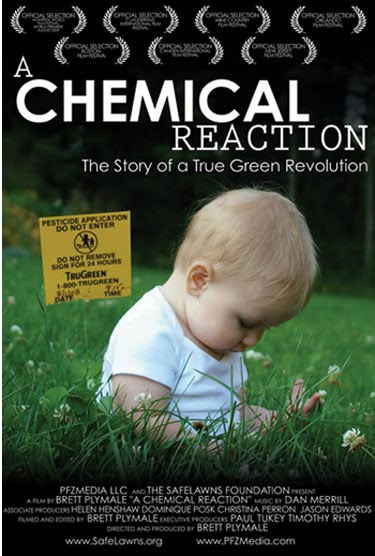
Tuesday, June 28, 2011
Summer Skin Products part 1 (sunscreen)
So, we've covered this topic before, but, since things change and new products continually emerge (plus, who doesn't need a reminder from time to time?), here it is again...
Summer skin!
Of course, anyone with a brain knows that we should limit our time in the sun (but for heaven's sake - get out there and get some vitamin D - those of us in the NW know just how precious it is), stay hydrated, cover-up, and use sunscreen, but with so many products out there, which ones are best, which ones truly work, and which ones should be avoided at all cost? Plus, which ones are easy to find and affordable?
I have yet to find a sunscreen that meets every criteria. The organic mineral varieties tend to be chalky or gritty and don't rub into the skin well, so at the end of the day, you find yourself covered in a sticky dusting of grainy powder. Bleck! Last season I tried Burt's Bees, Alba, Jason and finally became frustrated and settled on Neutrogena Pure & Free Baby sunblock (which earned a fairly decent score from EWG last season, but is now on the list of "high toxicity" products because of the ingredient retinyl palmitate/Vitamin A - insert expletive here).
I live in a small town, so finding obscure organic brands can be difficult to impossible (and expensive!). We do have a place that will special order so I don't have to pay shipping (Sunny Farms Supplements in Sequim), and some of the big name stores are starting to carry more organic brands. The problem still remains that a lot of the so-called organics still contain unsavory ingredients and just market themselves as organic because they have one or two organic ingredients. Grrr...
Probably the best place I've found to get good/current information on sunscreens (and a lot more) is the Environmental Working Group. Their 2011 Sunscreen Guide provides information about myths surrounding sunscreens (I was most surprised by this one: "Recently available data from an FDA study indicate that a form of vitamin A, retinyl palmitate, when applied to the skin in the presence of sunlight, may speed the development of skin tumors and lesions (NTP 2009). This evidence is troubling because the sunscreen industry adds vitamin A to 30 percent of all sunscreens"), sun safety, and best sunscreen products. I'm a big fan of their Hall of Shame. Hard to believe so many baby sunblocks are so very, very bad.
The best sunscreens (outside of the mineral types) are those that contain zinc or titanium. These provide the best UVA protection w/out causing chemical hormone disruption. They should not contain oxybenzone or Vitamin A and should not be in powder or spray-on form, since those are more easily absorbed into the skin. Mineral sunscreens always get the highest ratings (but, as I said before, I have yet to find one that actually blends...they seem to have the consistency of peanut butter that has been left to sit out for several hours). Personally, I would rather not wear sunscreen than wear mineral.
To see the list of the top 153 sunscreens - click here.
I don't want to waste a ton of money looking, ordering, testing, and throwing away, so I plan to give the following products a try (they seem to fit the bill for "low toxicity", affordability, and accessibility). There doesn't seem to be a "perfect" sunscreen out there...so these are the next best thing - for now. Further research unfolds the problems/risks with these options...so now, it's making a decision about which risks are acceptable.
1. Bullfrog Ultimate Sheer Protection SPF 30 (contains "high toxicity" fragrance, the Chattem, Inc. website says they do not do any animal testing and this is seconded by The Global Action Network)
2. Coppertone Oil-Free Sunscreen Lotion SPF 15 (problem - contains oxybenzone, parabens, and aluminum, animal testing possible)
Beyond Coastal (I can only find this online - may be able to order at Sunny Farms - all around good rating, though - and it isn't mineral!)
3. Lubriderm Daily Moisture Lotion SPF 15 (problem - it's a Johnson & Johnson company, which means animal testing!)
Since I want
a decent SPF,
no parabens (those are on my cosmetic no-no list),
oil-free (no need to encourage break-outs or unwanted shine),
sweat/water resistance,
no aluminum (after all, all that work trying to find aluminum-free deodorant cannot go to waste just because it's summer),
no mineral,
no animal testing,
and no mail-order...
(sheesh I am a picky gal!)
The winner is BULLFROG. Who knew?

Now, if you are one of those who are cool with the mineral stuff - I've heard that Badger is the best. Alba, Aubrey Organics, Jason, Nature's Gate, Kiss My Face, and Earth's Best are fairly easy to find around the peninsula. All of these tend to be pricey...but then, I suppose our skin is worth it.
Phew! It took me roughly 2 hours to complete this post, research included. I visited 23 different websites to whittle it down to the most accurate information. So, there you have it: one question (what sunblock should I go an buy this afternoon?), hours of research, and one answer (Bullfrog).
The annoying thing about all of this is, as I have learned, that once you have narrowed it down to a product, it doesn't mean that every product in that brand meet the same criteria...so more research has to be done with every single item within a product name.
Sometimes I hate that I care.
Summer skin!
Of course, anyone with a brain knows that we should limit our time in the sun (but for heaven's sake - get out there and get some vitamin D - those of us in the NW know just how precious it is), stay hydrated, cover-up, and use sunscreen, but with so many products out there, which ones are best, which ones truly work, and which ones should be avoided at all cost? Plus, which ones are easy to find and affordable?
I have yet to find a sunscreen that meets every criteria. The organic mineral varieties tend to be chalky or gritty and don't rub into the skin well, so at the end of the day, you find yourself covered in a sticky dusting of grainy powder. Bleck! Last season I tried Burt's Bees, Alba, Jason and finally became frustrated and settled on Neutrogena Pure & Free Baby sunblock (which earned a fairly decent score from EWG last season, but is now on the list of "high toxicity" products because of the ingredient retinyl palmitate/Vitamin A - insert expletive here).
I live in a small town, so finding obscure organic brands can be difficult to impossible (and expensive!). We do have a place that will special order so I don't have to pay shipping (Sunny Farms Supplements in Sequim), and some of the big name stores are starting to carry more organic brands. The problem still remains that a lot of the so-called organics still contain unsavory ingredients and just market themselves as organic because they have one or two organic ingredients. Grrr...
Probably the best place I've found to get good/current information on sunscreens (and a lot more) is the Environmental Working Group. Their 2011 Sunscreen Guide provides information about myths surrounding sunscreens (I was most surprised by this one: "Recently available data from an FDA study indicate that a form of vitamin A, retinyl palmitate, when applied to the skin in the presence of sunlight, may speed the development of skin tumors and lesions (NTP 2009). This evidence is troubling because the sunscreen industry adds vitamin A to 30 percent of all sunscreens"), sun safety, and best sunscreen products. I'm a big fan of their Hall of Shame. Hard to believe so many baby sunblocks are so very, very bad.
The best sunscreens (outside of the mineral types) are those that contain zinc or titanium. These provide the best UVA protection w/out causing chemical hormone disruption. They should not contain oxybenzone or Vitamin A and should not be in powder or spray-on form, since those are more easily absorbed into the skin. Mineral sunscreens always get the highest ratings (but, as I said before, I have yet to find one that actually blends...they seem to have the consistency of peanut butter that has been left to sit out for several hours). Personally, I would rather not wear sunscreen than wear mineral.
To see the list of the top 153 sunscreens - click here.
I don't want to waste a ton of money looking, ordering, testing, and throwing away, so I plan to give the following products a try (they seem to fit the bill for "low toxicity", affordability, and accessibility). There doesn't seem to be a "perfect" sunscreen out there...so these are the next best thing - for now. Further research unfolds the problems/risks with these options...so now, it's making a decision about which risks are acceptable.
1. Bullfrog Ultimate Sheer Protection SPF 30 (contains "high toxicity" fragrance, the Chattem, Inc. website says they do not do any animal testing and this is seconded by The Global Action Network)
2. Coppertone Oil-Free Sunscreen Lotion SPF 15 (problem - contains oxybenzone, parabens, and aluminum, animal testing possible)
Beyond Coastal (I can only find this online - may be able to order at Sunny Farms - all around good rating, though - and it isn't mineral!)
3. Lubriderm Daily Moisture Lotion SPF 15 (problem - it's a Johnson & Johnson company, which means animal testing!)
Since I want
a decent SPF,
no parabens (those are on my cosmetic no-no list),
oil-free (no need to encourage break-outs or unwanted shine),
sweat/water resistance,
no aluminum (after all, all that work trying to find aluminum-free deodorant cannot go to waste just because it's summer),
no mineral,
no animal testing,
and no mail-order...
(sheesh I am a picky gal!)
The winner is BULLFROG. Who knew?

Now, if you are one of those who are cool with the mineral stuff - I've heard that Badger is the best. Alba, Aubrey Organics, Jason, Nature's Gate, Kiss My Face, and Earth's Best are fairly easy to find around the peninsula. All of these tend to be pricey...but then, I suppose our skin is worth it.
Phew! It took me roughly 2 hours to complete this post, research included. I visited 23 different websites to whittle it down to the most accurate information. So, there you have it: one question (what sunblock should I go an buy this afternoon?), hours of research, and one answer (Bullfrog).
The annoying thing about all of this is, as I have learned, that once you have narrowed it down to a product, it doesn't mean that every product in that brand meet the same criteria...so more research has to be done with every single item within a product name.
Sometimes I hate that I care.
Subscribe to:
Comments (Atom)